Create and manage Content Planner statuses
Content Planner statuses let you define the stages pages move through during your content workflow. You can create your own statuses, organize their order, import a reusable workflow template and make pages read-only when they reach a particular stage.
Before you begin
Only the project Owner, an Admin or a Project Manager can manage the project’s available statuses.
Contributors and Writers cannot create or manage the project’s status options. When assigned to a page, they can change that page’s status. Commentators cannot change page statuses.
Open the Statuses page
You can open Statuses from Content Overview in either of these ways:
- Select the Statuses tab in the Content navigation.
- Find the Workflow Status widget below the calendar widget, then select Manage.
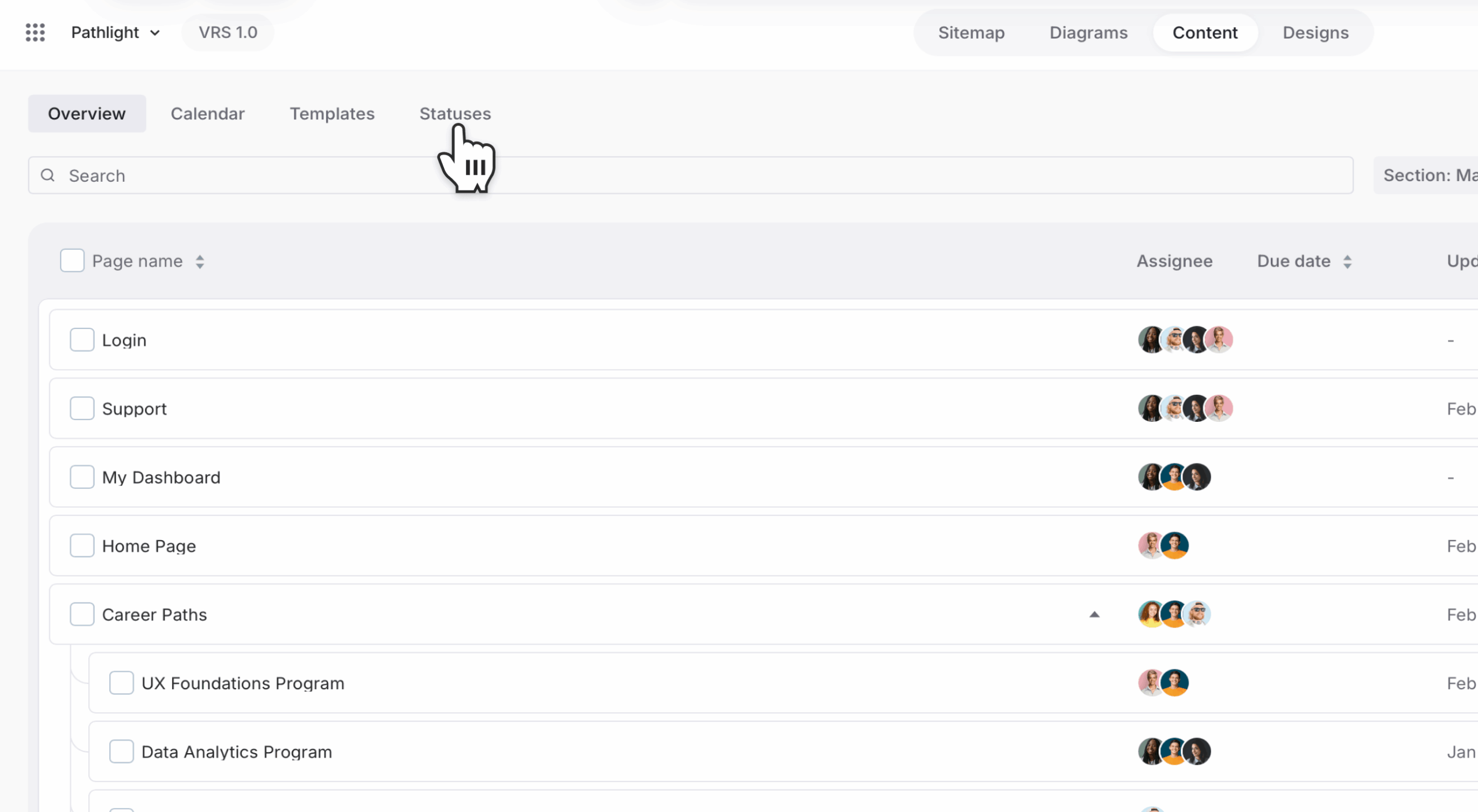
Both options open the Statuses page.
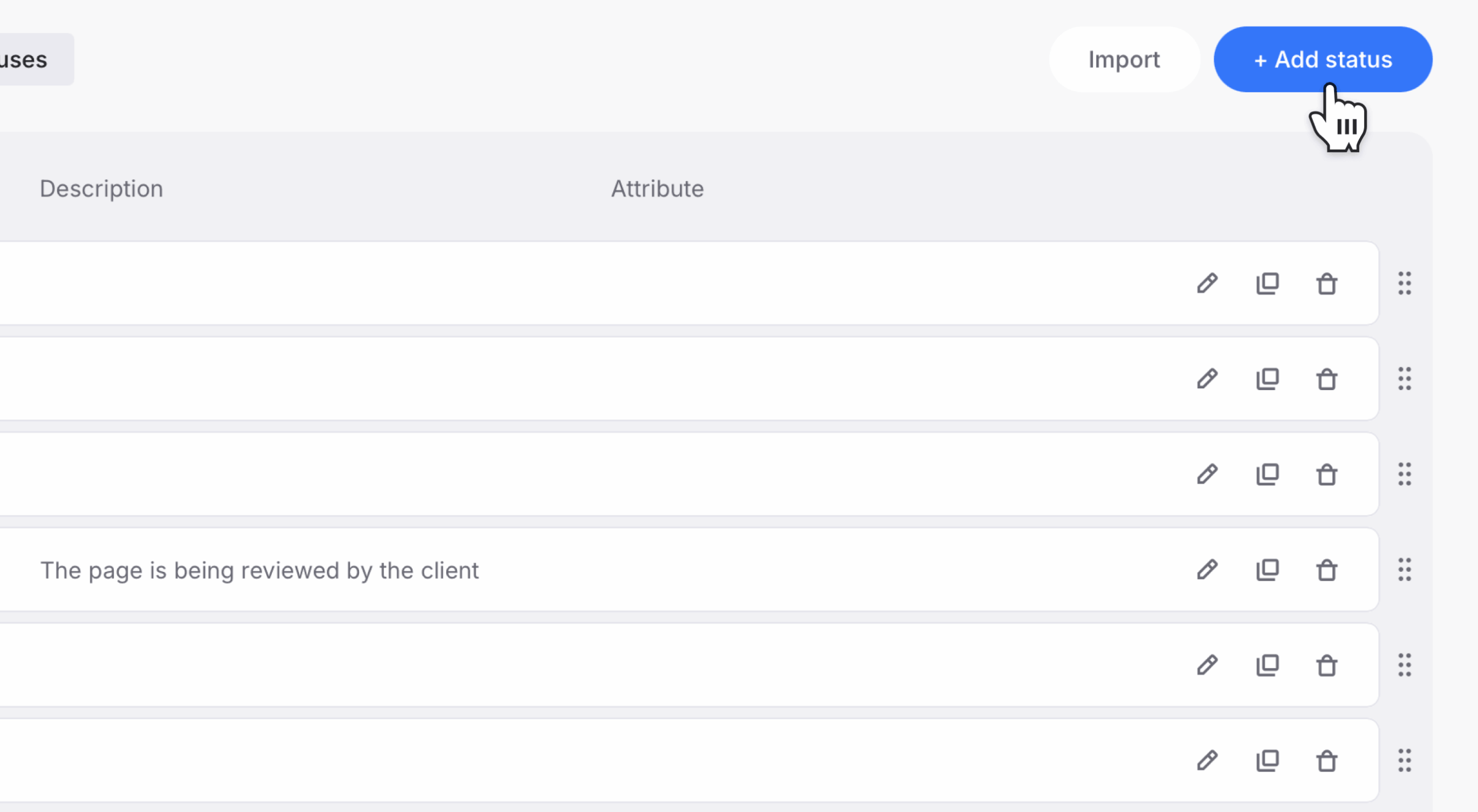
The project’s available statuses are displayed in a table. Each row includes:
- Status name
- Description
- Attribute, such as Read-only
- Controls to edit, clone or delete the status
- A six-dot drag handle for changing its position
The status order is reflected in the Workflow Status widget in Content Overview. Status colors and order are also used throughout Content Planner.
Add a status
- Open the Statuses page.
- Select + Add status.
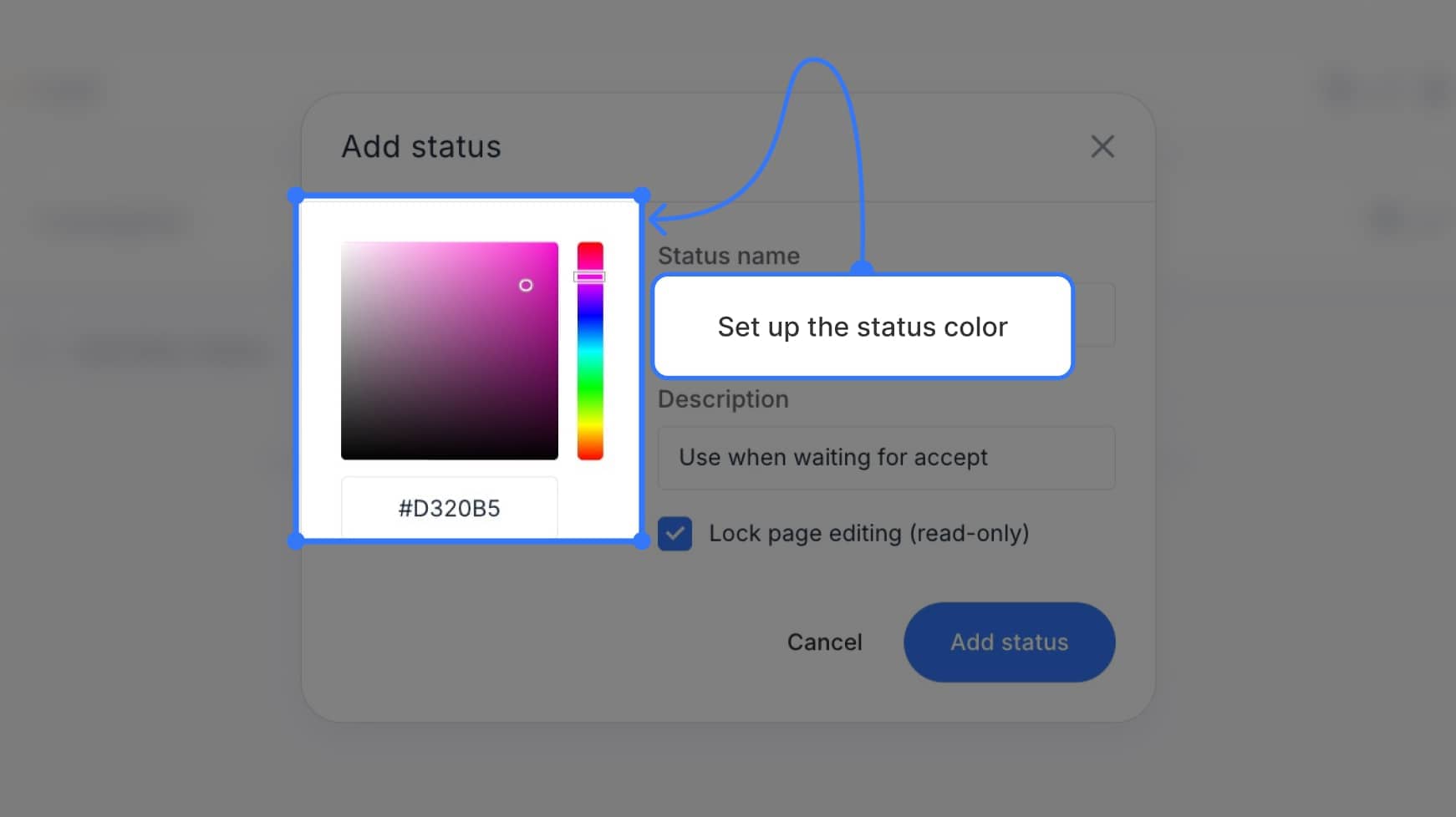
- Choose a color using the color selector. You can use the color palette or enter a hex color value.
- Enter a Status name.
- Add an optional Description.
- To prevent page content from being edited while this status is assigned, select Lock page editing (read-only).
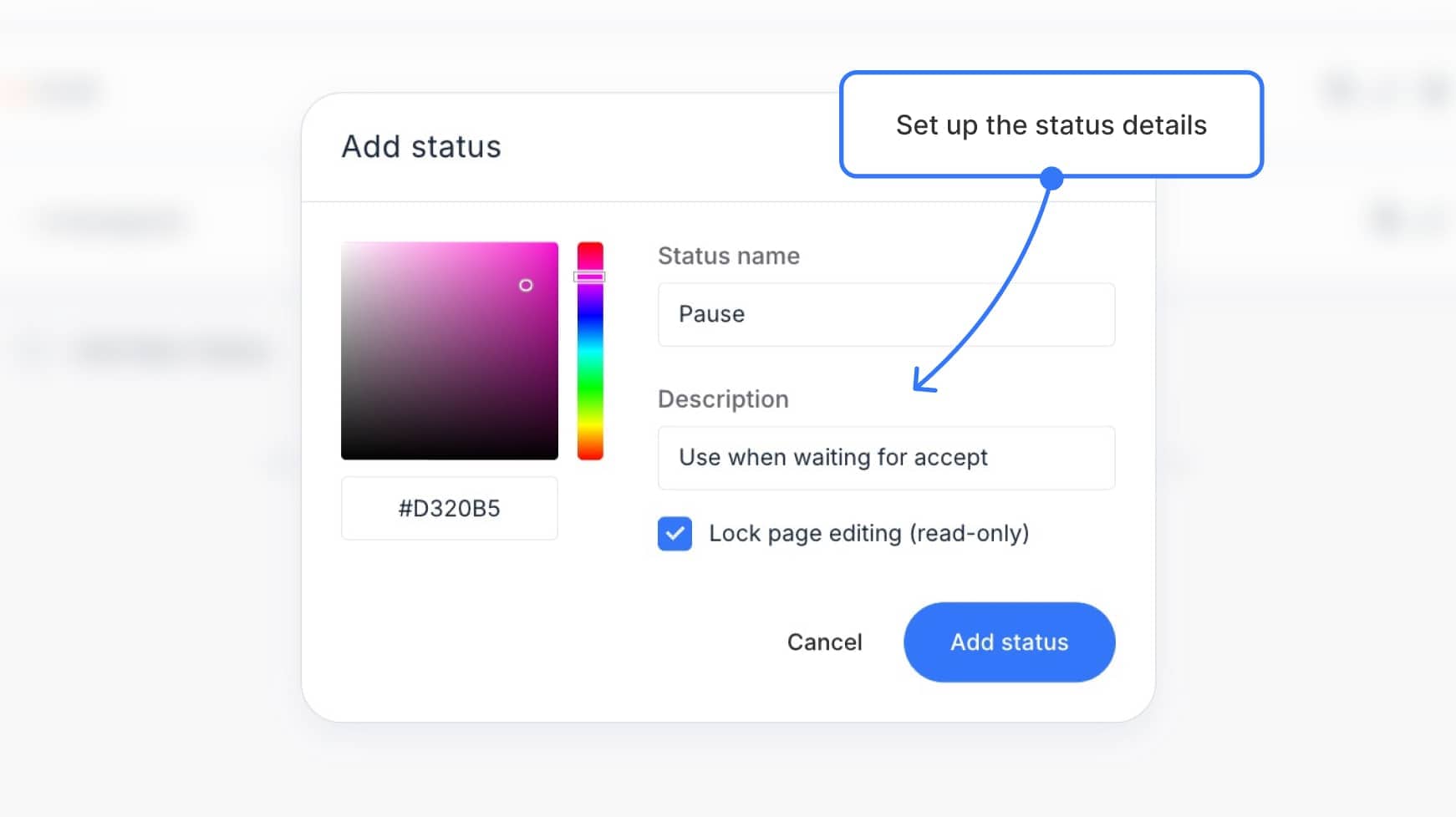
- Select Add status.
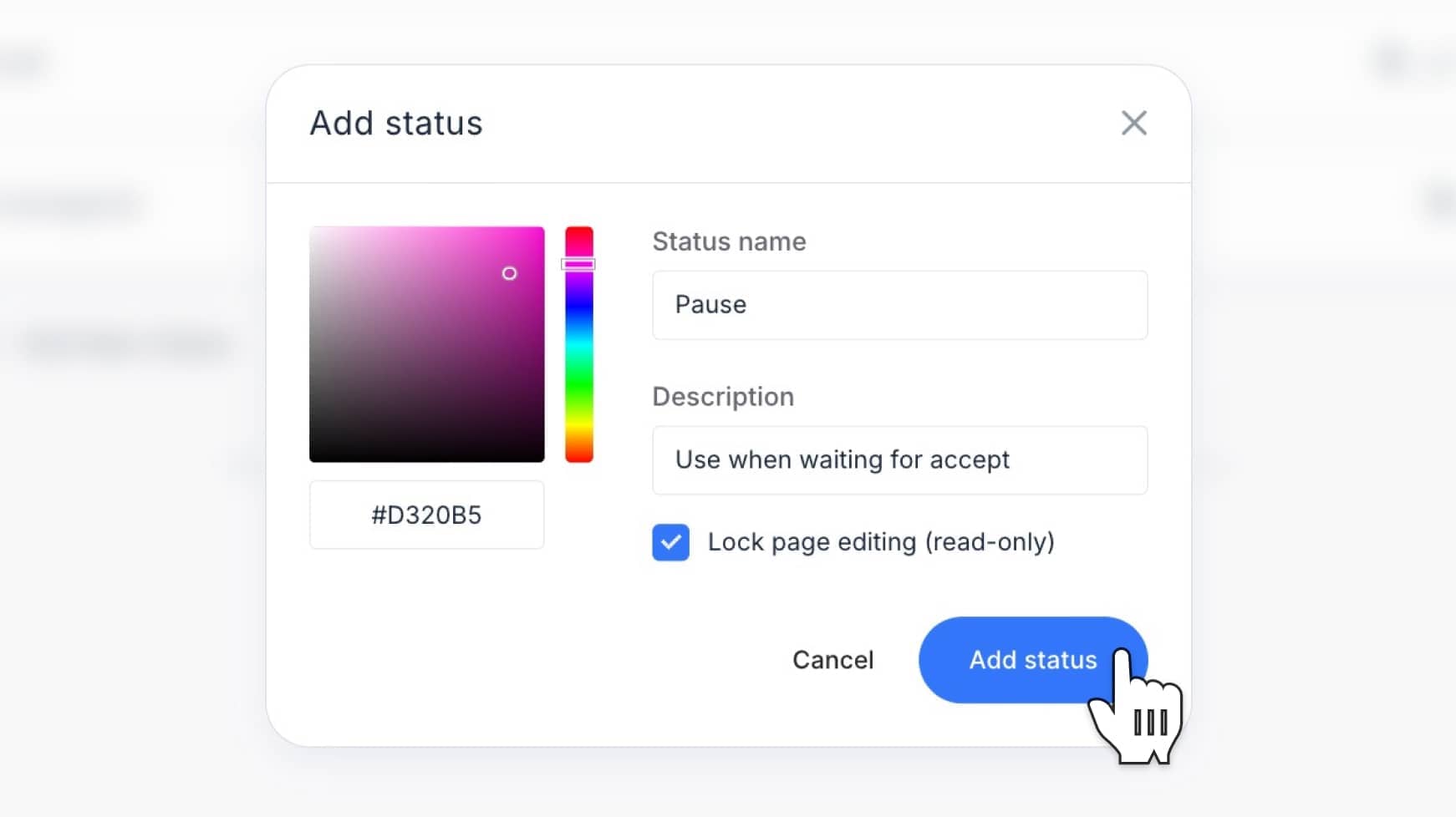
The new status is added to the project and becomes available when changing a page’s status.
Manage existing statuses
You can edit, clone or reorder statuses from the status table.
Edit a status
- Find the status you want to update.
- Select Edit.
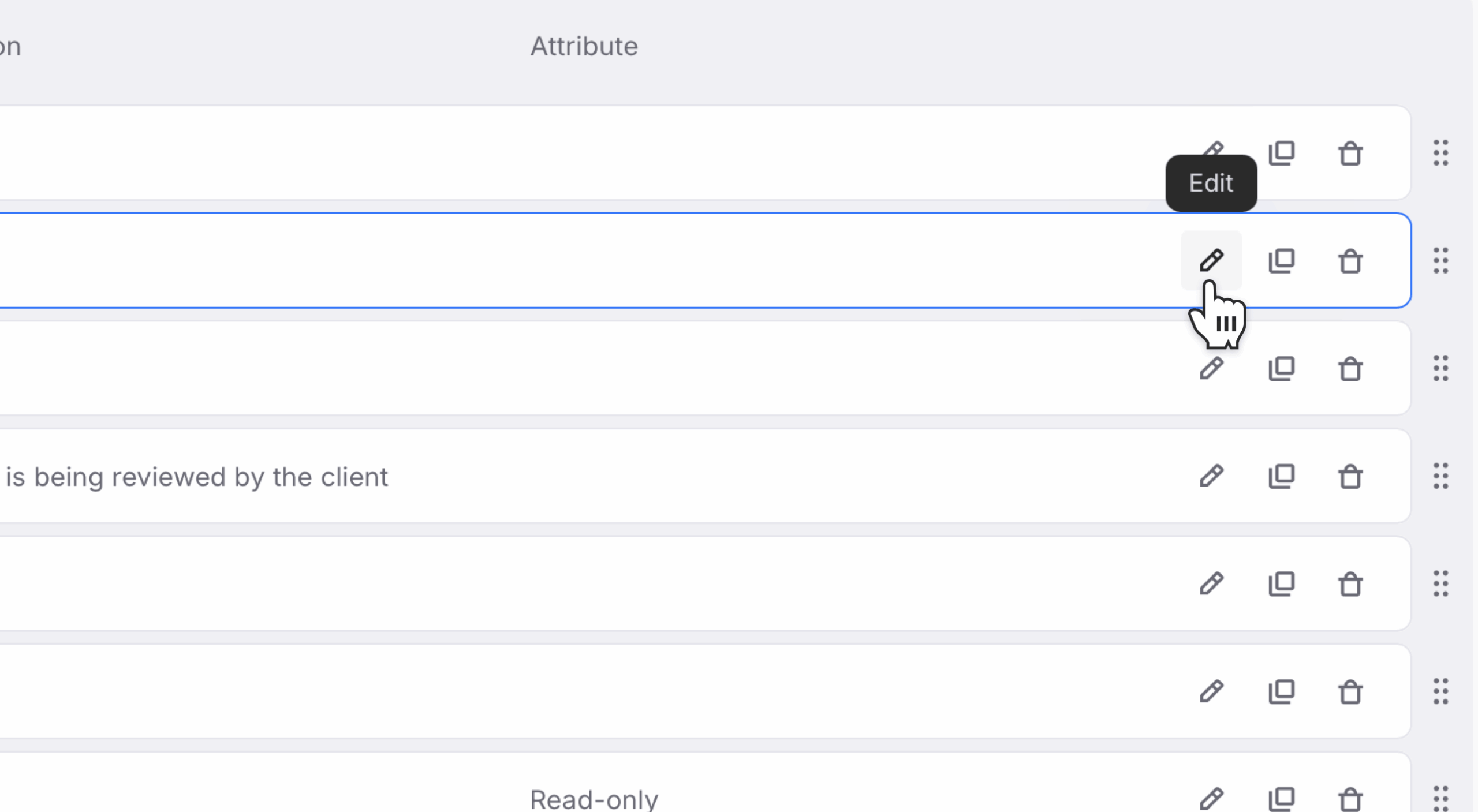
- Change the color, name, description or Lock page editing (read-only) setting.
- Select Save changes.
The changes are reflected anywhere the status is used in the project.
Clone a status
Cloning provides a starting point for a new status that uses the same settings as an existing one.
- Find the status you want to copy.
- Select Clone.
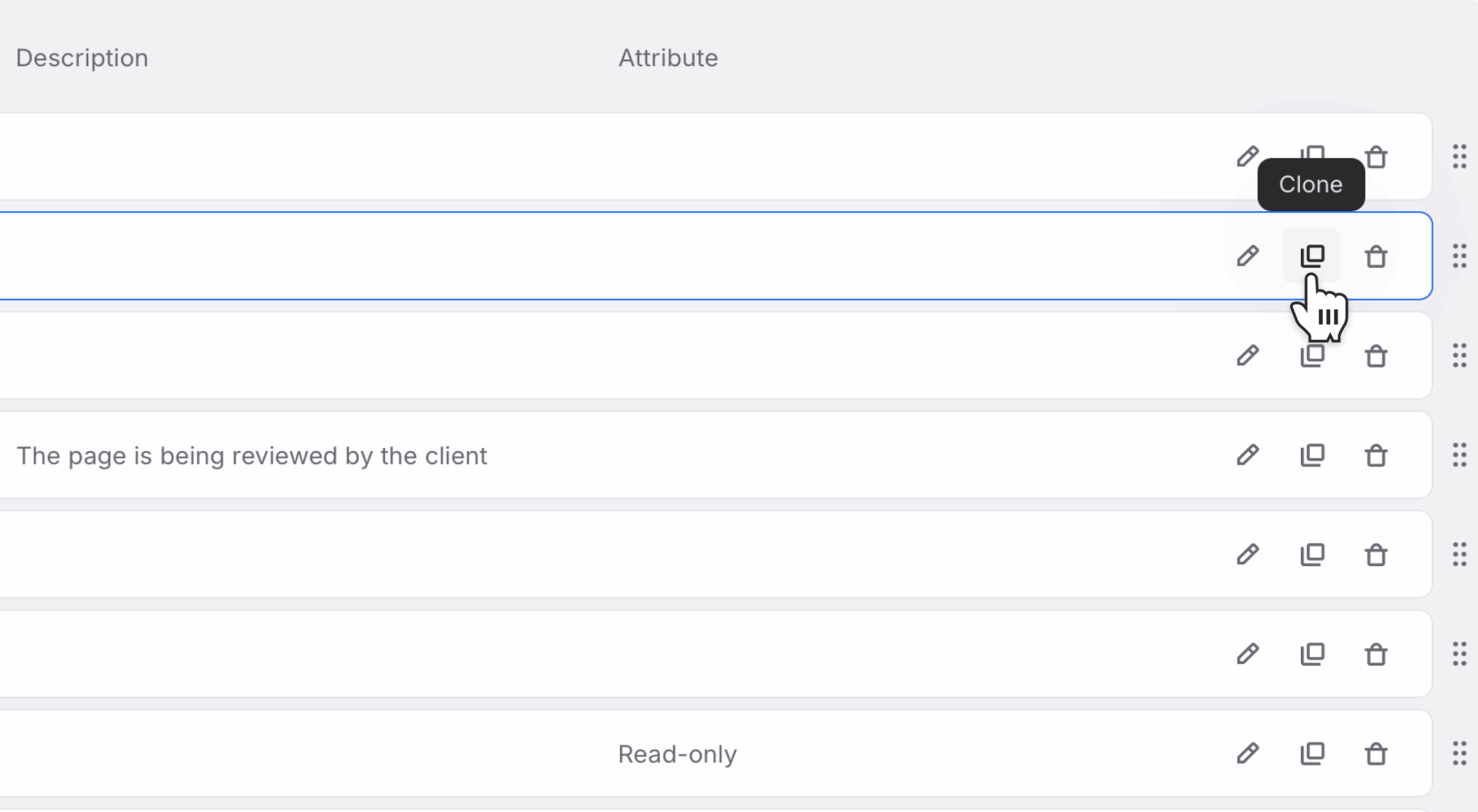
- Review the copied color, description and read-only setting.
- Edit the status name. The cloned name initially includes (clone).
- Change any other settings as needed.
- Select Add status.
The cloned status is added as a separate status. Changes to it do not affect the original.
Reorder statuses
- Point to the six-dot drag handle on the right side of a status row.
- Drag the status to its new position.
- Release it when it appears in the intended location.
The updated order is reflected in the project’s status displays, including the Workflow Status widget in Content Overview.
Reordering changes how statuses are presented. It does not automatically change the status assigned to any page.
Delete a status
You can delete any removable status. The system status Unassigned cannot be deleted.
- Find the status you want to remove.
- Select Delete.
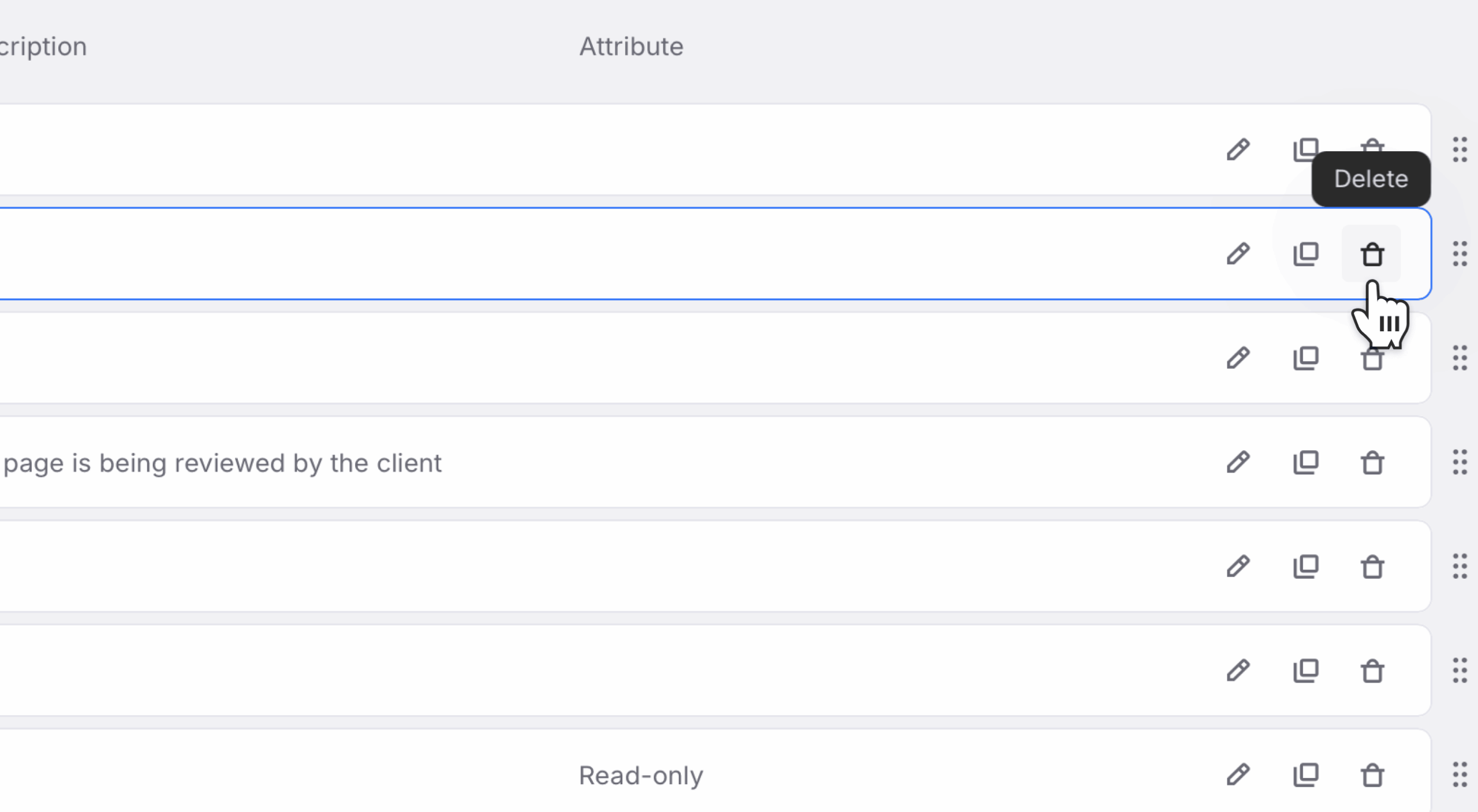
- In the Confirm deletion dialog, decide whether pages using the status should move to another status.
- To choose a replacement, select Reassign pages to a different status, then select a status from the list.
- Select Delete.
If you do not select a replacement, pages using the deleted status automatically move to Unassigned.
Every page always has a status. Pages without another selected status use Unassigned, which is why it remains permanently available.
Create a reusable workflow template
Workflow templates are created in your account settings. They let you reuse the same collection of statuses in multiple projects.
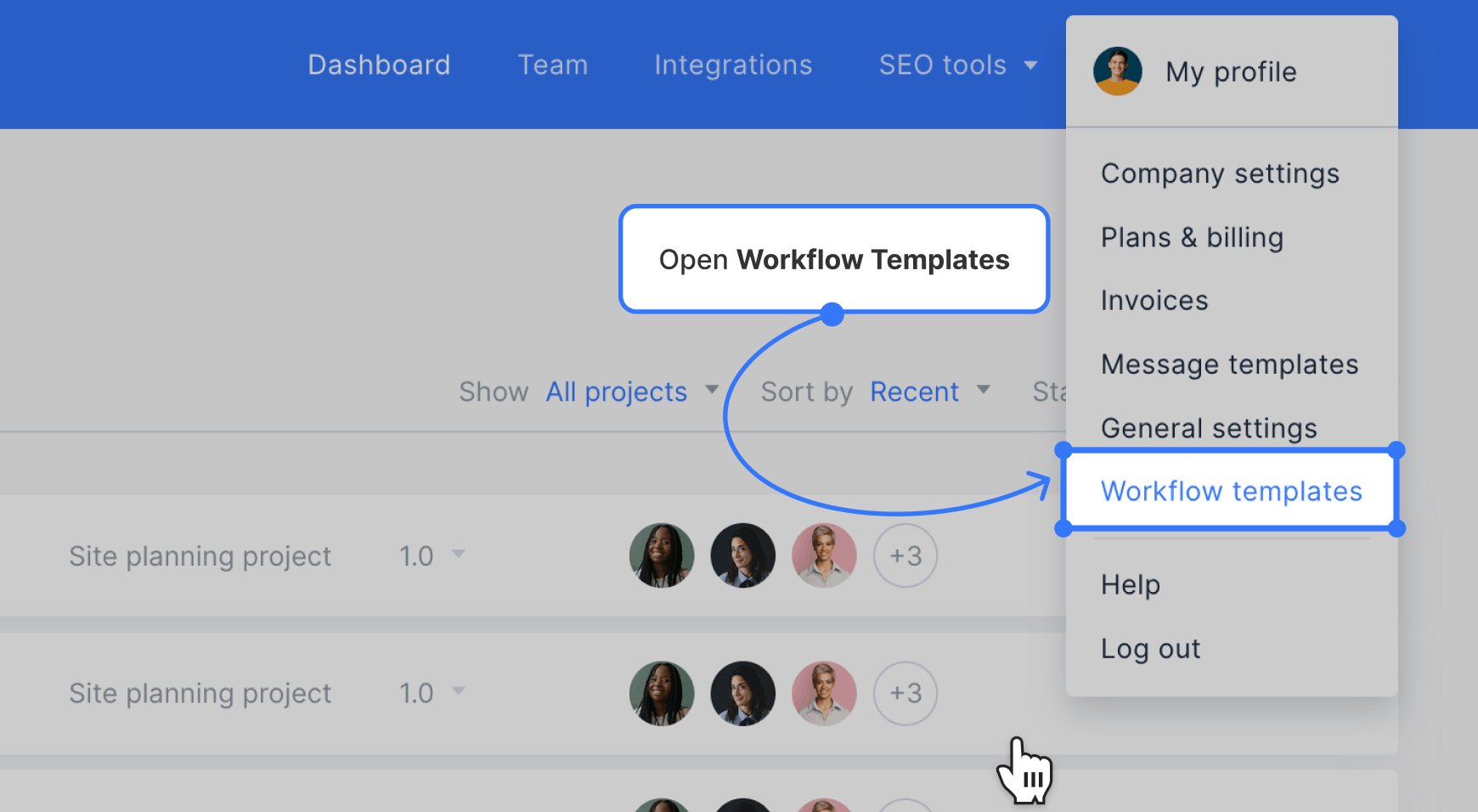
- Open your account menu.
- Select Workflow Templates.
- Create or open a workflow template.
- Give the template a name.
- Add and organize its statuses.
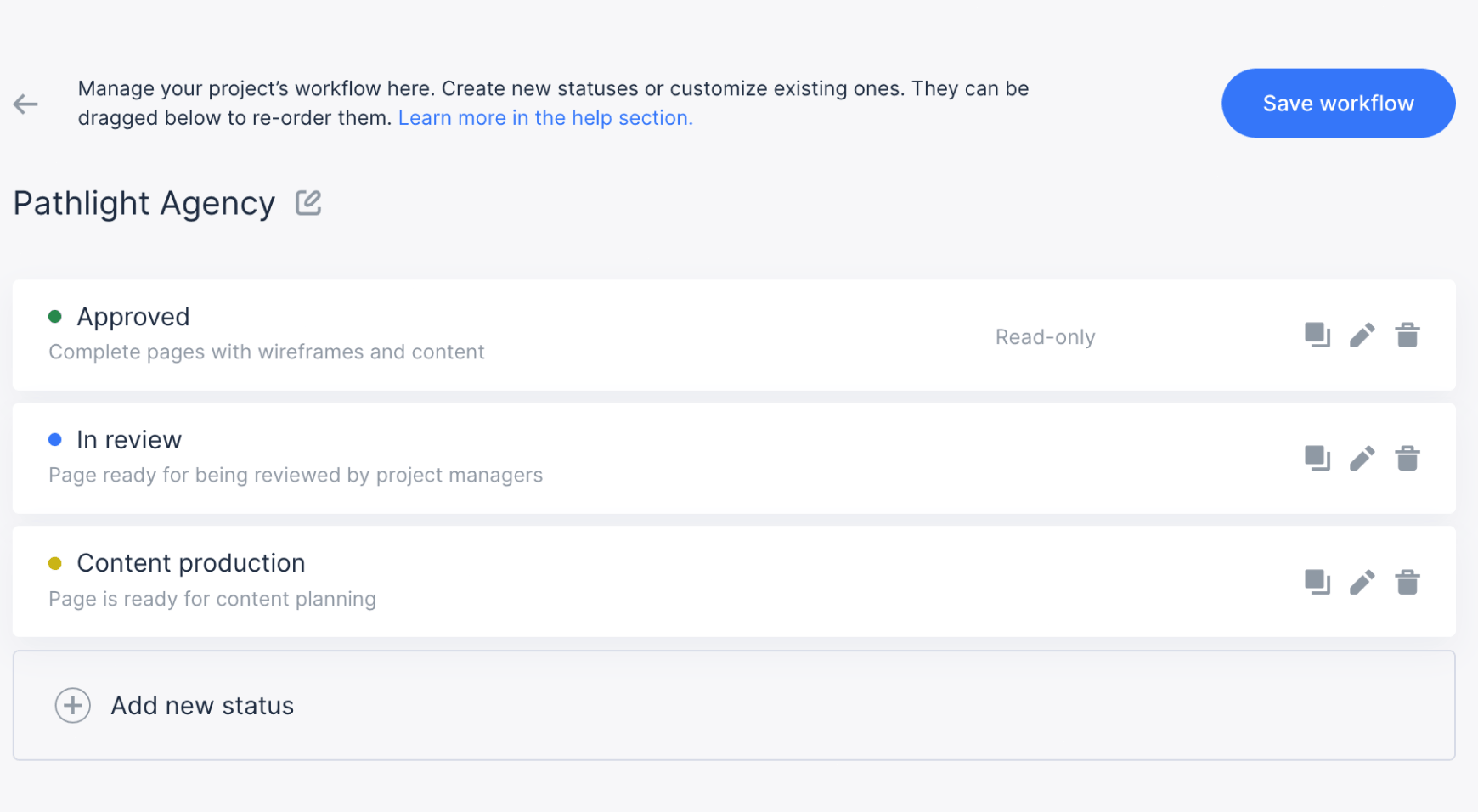
Creating statuses in a workflow template uses the same fields as creating statuses inside a project.
Import a workflow template
Importing a reusable workflow template replaces the project’s current workflow and existing status configuration.
- Open the project’s Statuses page.
- Select Import.
- In the Import workflow template dialog, open the template list.
- Select the reusable workflow template you want to apply.
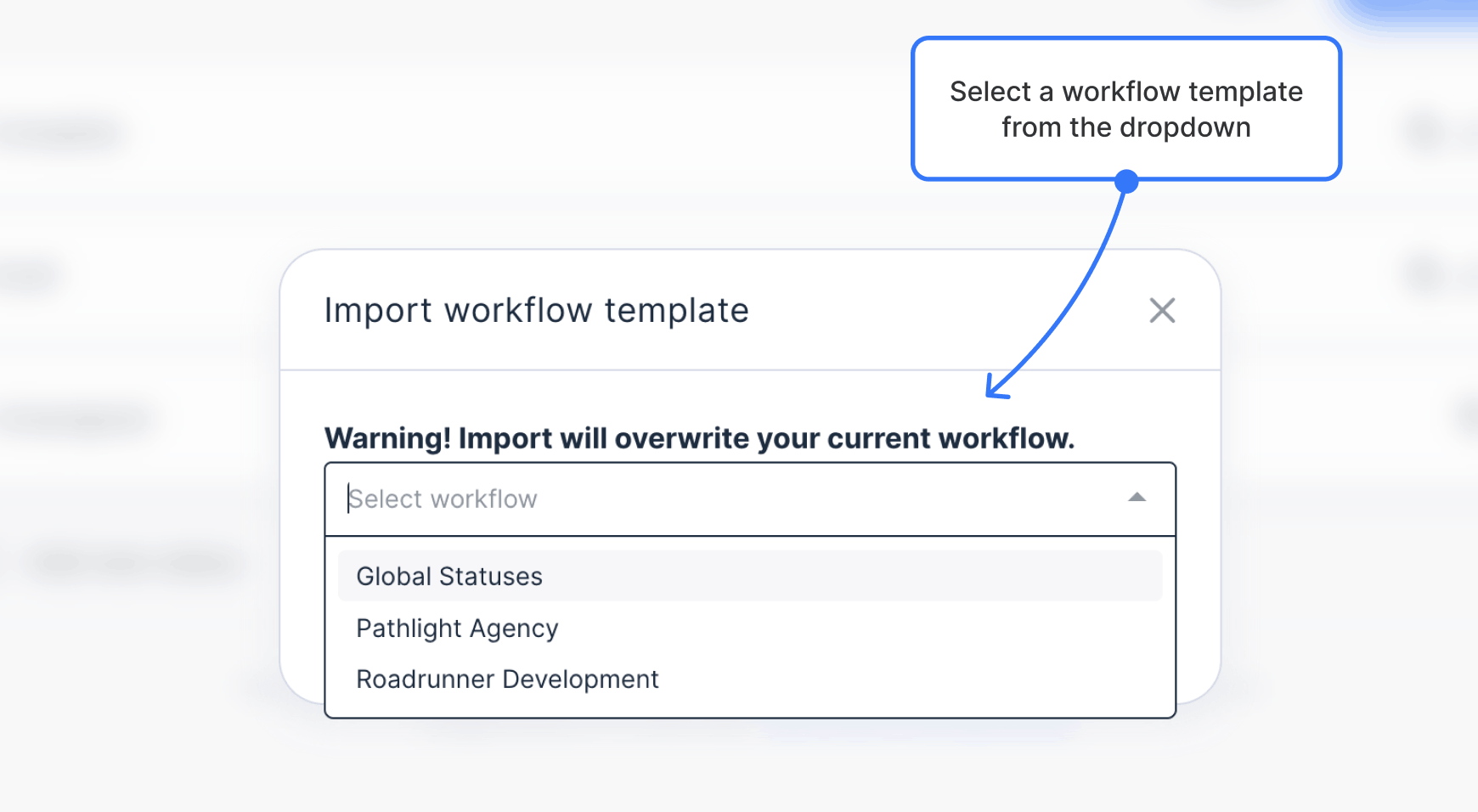
- Review the warning that importing the template will replace the current workflow for the project.
- Select Import.
The imported template replaces the existing collection of statuses. You can then edit, reorder or remove the imported statuses without changing the original reusable template.
Lock page editing with a status
Enable Lock page editing (read-only) when a status should prevent further content changes. For example, you might use it for a completed or approved stage.
When a page uses a read-only status:
- Content blocks in Page Editor become inactive.
- Blocks cannot be selected, edited or moved.
- Editing and formatting controls are unavailable.
- The page remains read-only until its status changes to one without the locking attribute.
An Owner, Admin or Project Manager can change the page to another status.
A Contributor or Writer assigned to the page can also change its status, including moving it out of Complete. They can edit the page content only when the selected status does not lock editing.
A Commentator cannot change the page status.
For instructions covering the available places where a page’s status can be changed, see Updating page statuses.