Import Google sitemap XML
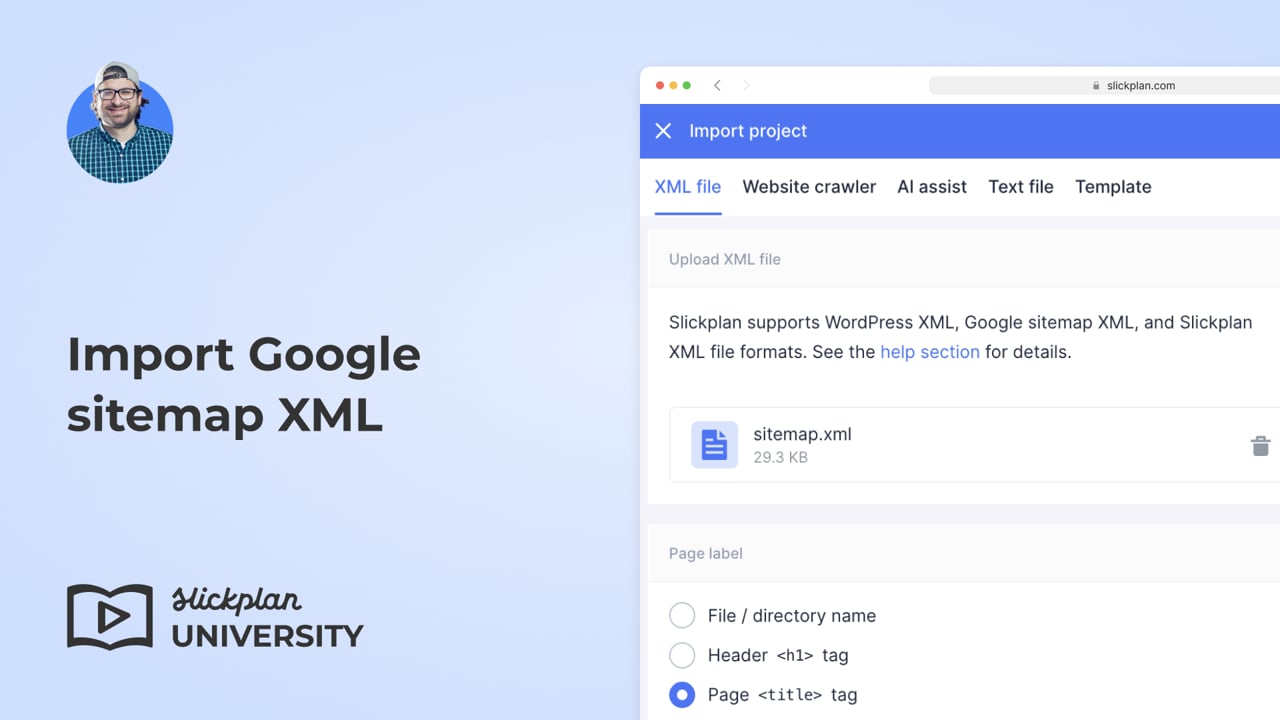
Importing a Google XML sitemap is done using Slickplan’s proprietary website crawler and is available only to Pro, Team, and Agency users.
To import a Google XML sitemap, simply follow these steps:
- Find and export the sitemap from your current website.
- In Slickplan, open an existing project or create a new one.

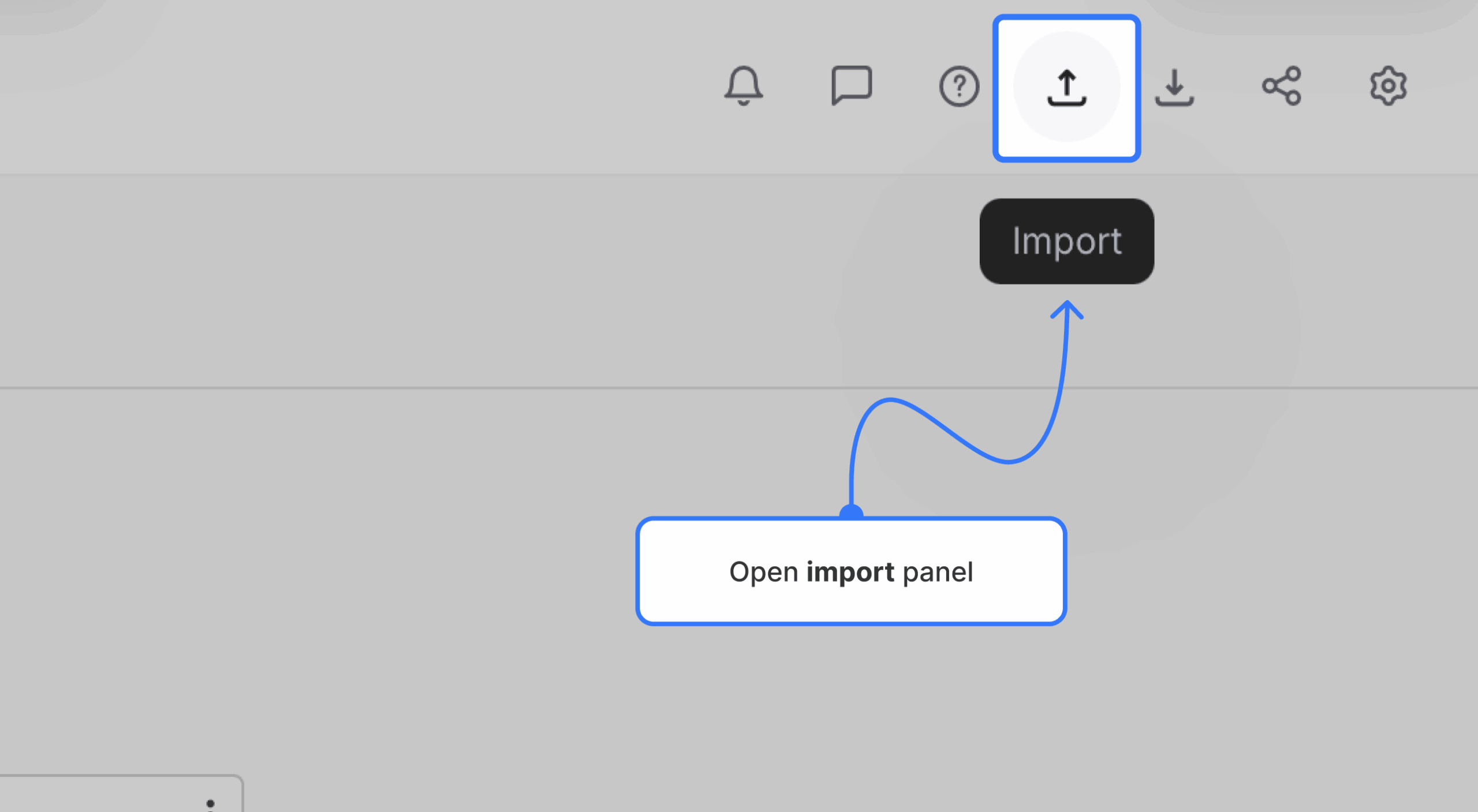
- Click the Import icon in the navigation bar (this will overwrite your current sitemap).
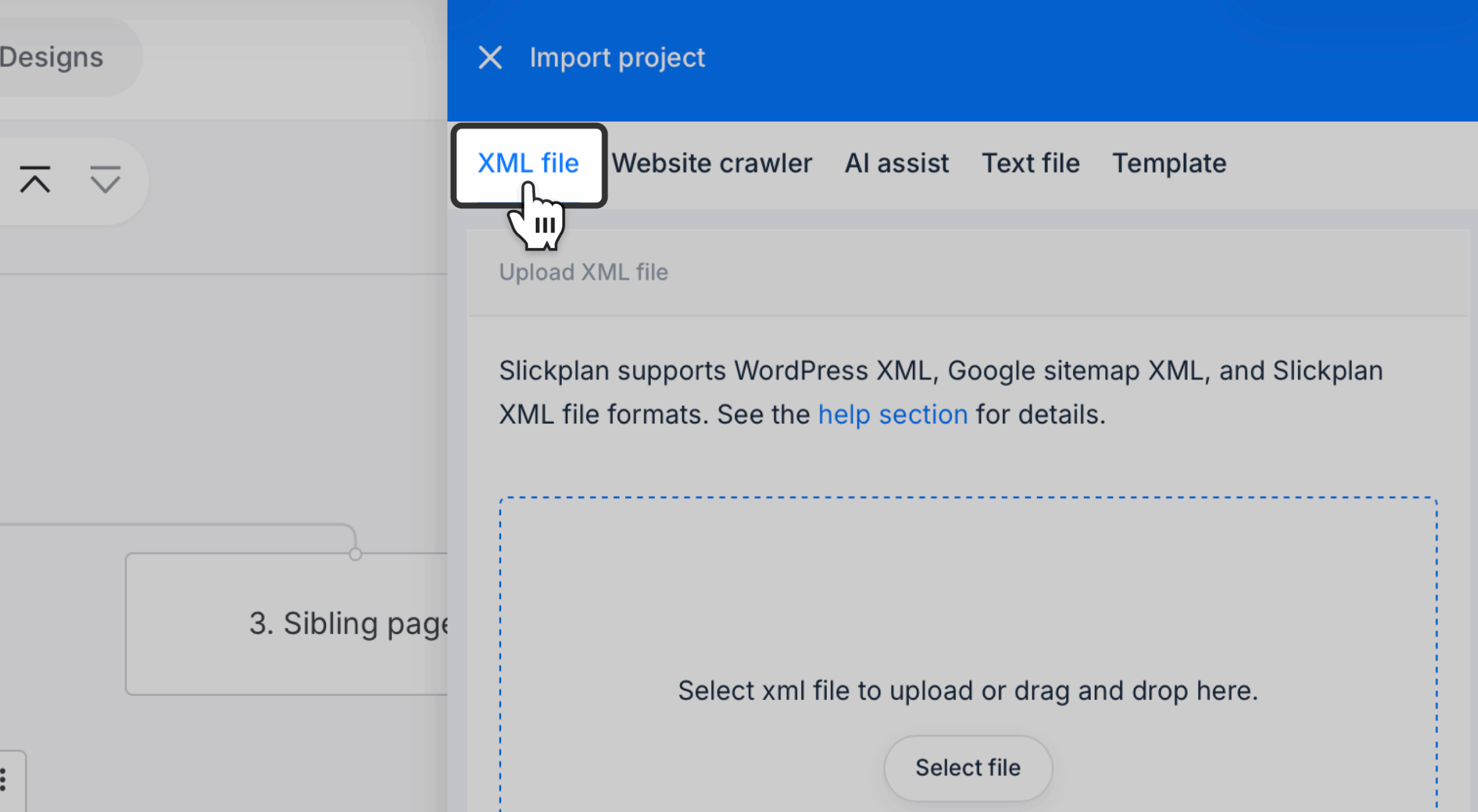
- In the import panel, select the XML file tab.
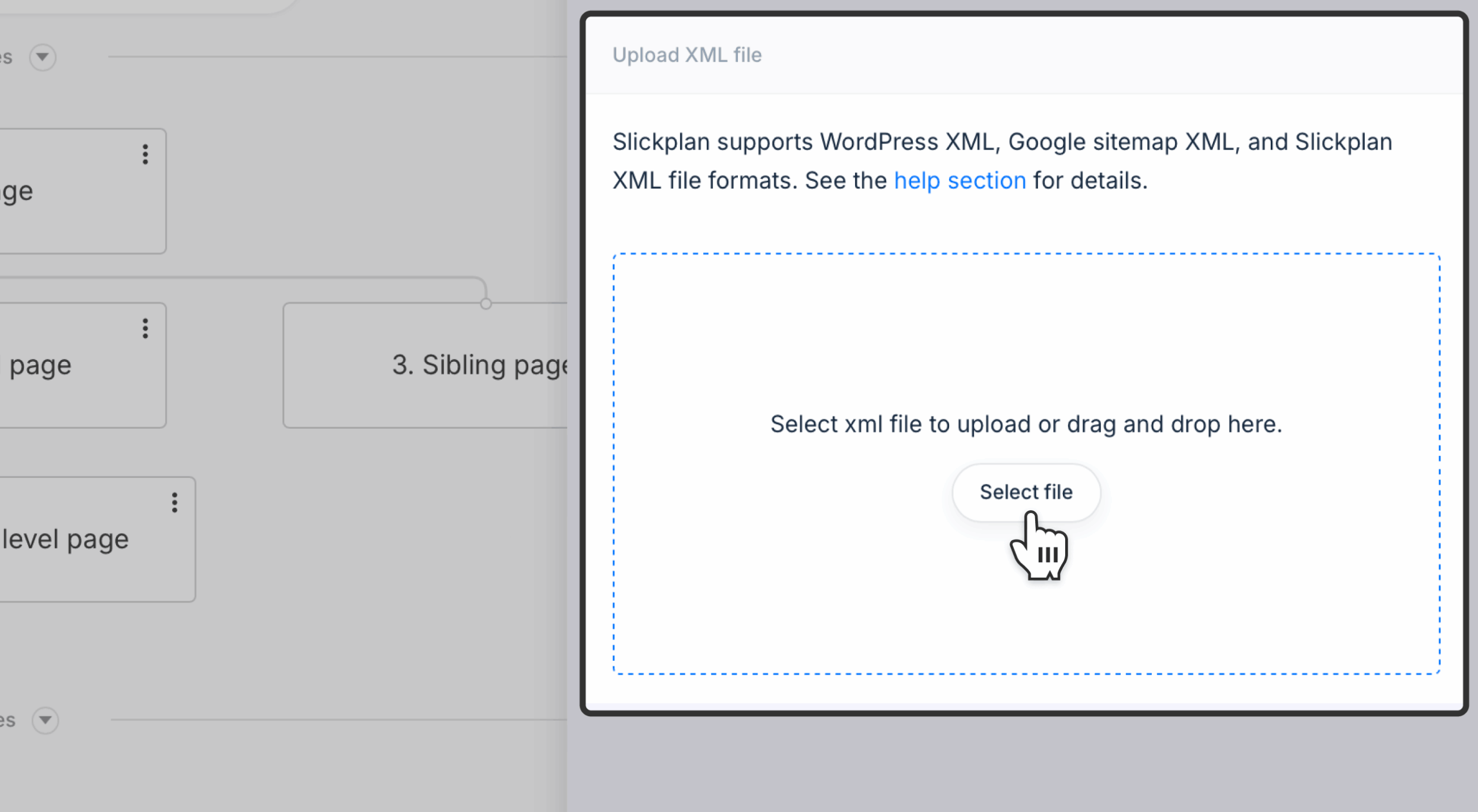
- Drag your file into the drop zone or click Select file to upload it from your computer.
- Choose any additional options for your imported sitemap:
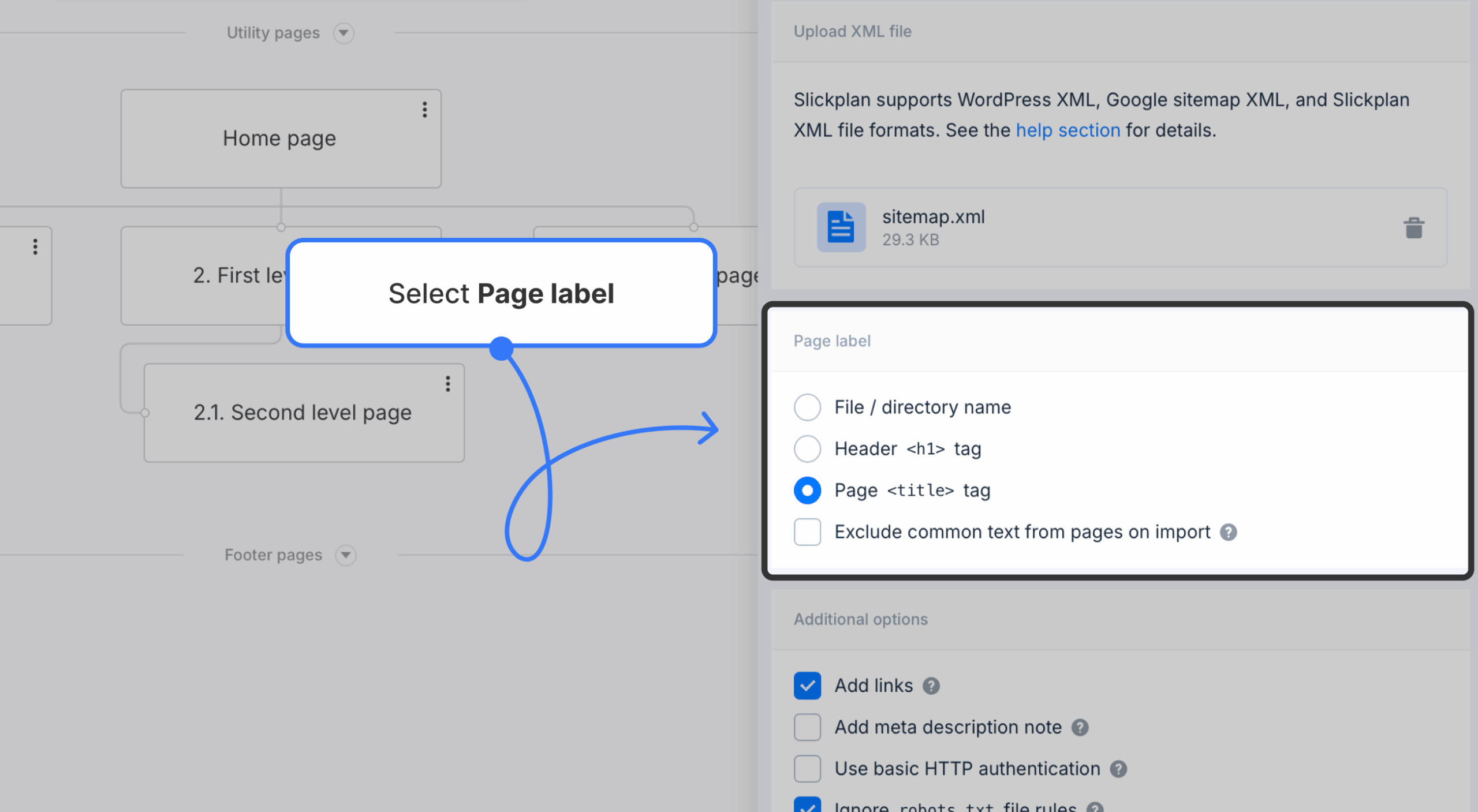
- Page Text
- Click Use File/Directory name to add the file or directory name to your sitemap label.
- Click Use H1 to include the main header in your sitemap label.
- Click Use Page Title to add the page title to your sitemap label.
- (Optional) Exclude Common Text Pages on Import – this option removes standard text that repeats on your site, like “| Company Name,” from imported titles.
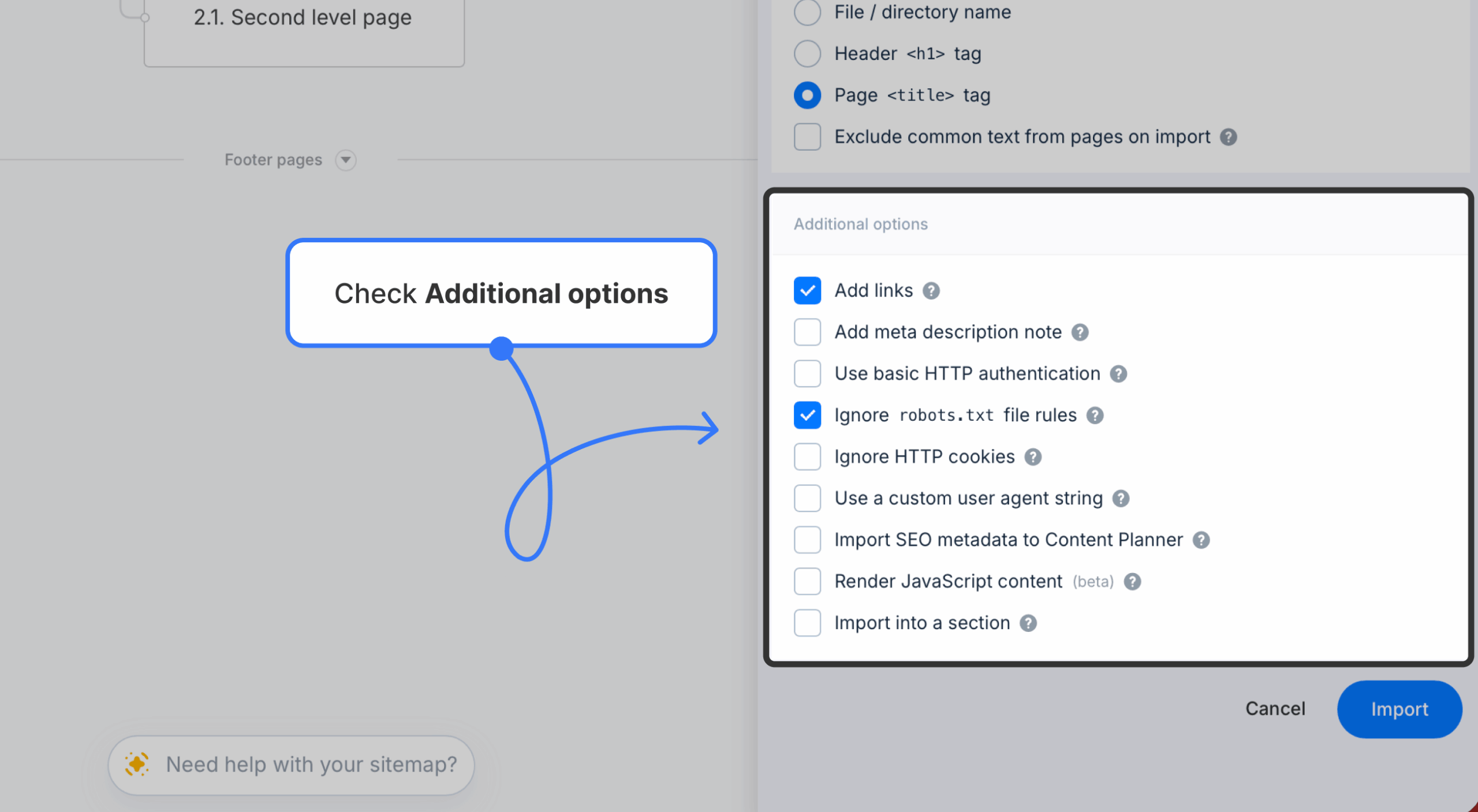
- Other
- Check Add Links to include a link in your sitemap.
- Add Meta Description Note to include a note from thetag.
- If your site is password protected, select Use HTTP Basic Authentication and enter your username and password (Note: This works only with the HTTP Basic Auth method).
- Check Ignore ROBOTS.TXT rules if your server blocks web crawlers.
- The Ignore HTTP Cookies option ignores cookies your site tries to store.
- Use a custom User Agent string – this option, which is pre-filled with your browser’s name, helps bypass firewalls that block crawlers.
- Import SEO metadata to Content Planner imports SEO details (metadata and URL slug) for each page into the Content Planner.
- Render JavaScript Content – check this option if your site has JavaScript-generated content.
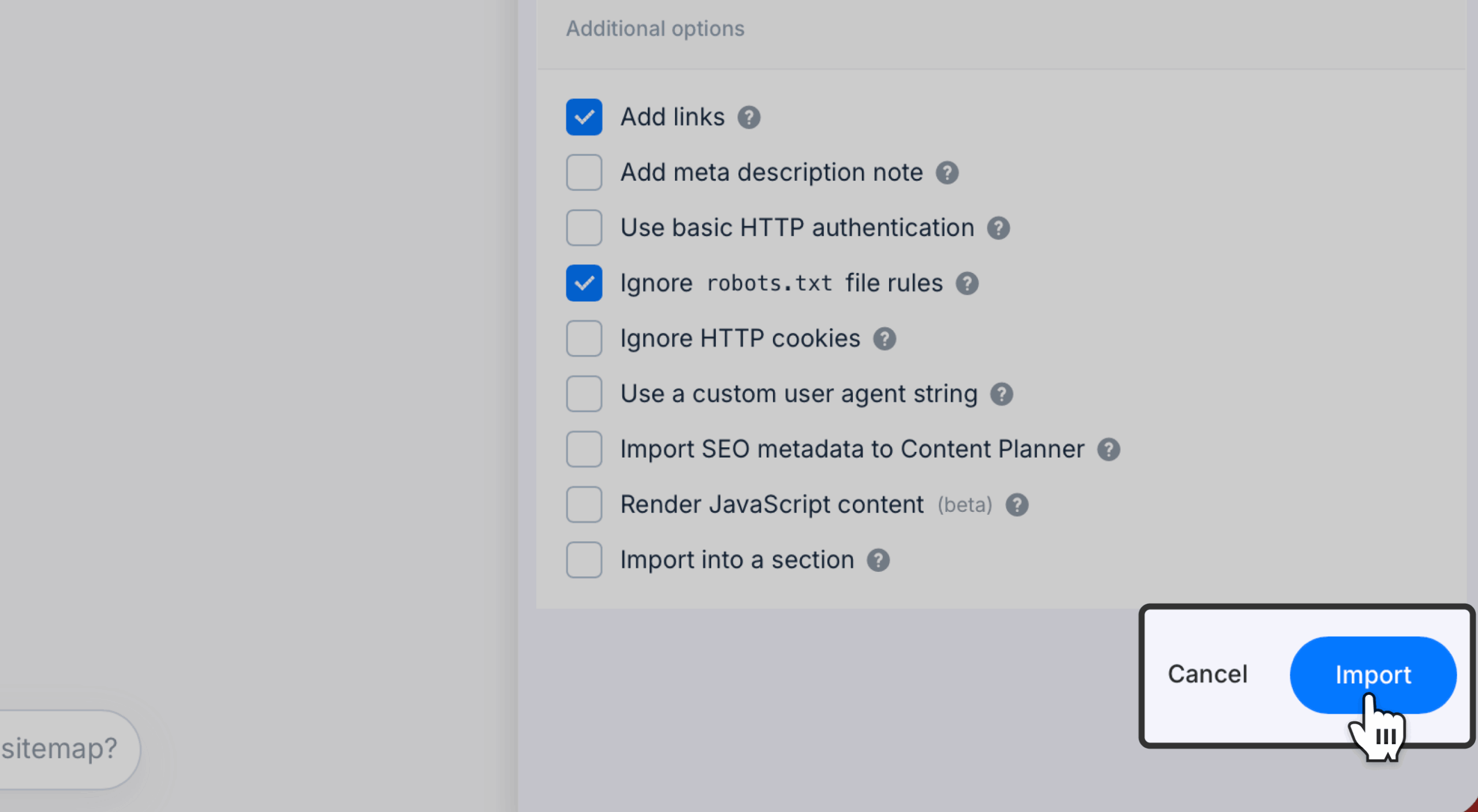
- Click Import to complete the process.
After a few seconds, you’ll see a message confirming that your sitemap was successfully imported.
Note: When importing Google XML sitemaps, you must use the website crawler, which can scan up to 10,000 pages at a time for security reasons. If you only want to import a list of URLs from a file, choose the Page Text > File/directory name import option.